


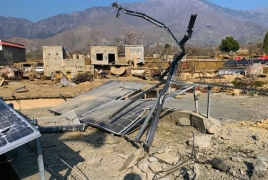


Afghanistan’s ruling Taliban movement announced the start of a «large-scale offensive» against Pakistani military facilities.
Spokesman Zabihullah Mujahid said the decision was taken «in response to numerous provocations and border violations» by Islamabad. On February 21, Pakistan’s armed forces carried out airstrikes in the provinces of Paktia and Nangarhar near the disputed Durand Line, stating that the targets were camps belonging to Tehrik-e-Taliban Pakistan and Islamic State.
Fighting is currently ongoing in the provinces of Nangarhar, Nuristan, Kunar, Khost, Paktia and Paktika. According to Mujahid, Taliban forces captured 15 positions and killed 40 enemy soldiers, with additional wounded and prisoners reported. Pakistan’s Ministry of Information said the Taliban had «opened unprovoked fire» along the border and received an «immediate and efficient response», suffering «heavy losses». Pakistani sources told Reuters that 22 Taliban fighters were killed and drones were shot down. The agency’s sources said the exchange of fire lasted more than two hours.
Prime Minister’s spokesman Mosharraf Zaidi stated that no Pakistani post had been captured or destroyed. He warned that «any aggression will have a strong response». At the same time, Mujahid signaled the possibility of strikes on «centers and cities» in Pakistan if Kabul or other major Afghan cities were attacked.
Amid the escalation, Pakistan tightened security measures nationwide: troops were placed on heightened alert, intelligence-based operations were intensified, and dozens of suspects, including Afghan nationals, were detained over alleged militant links.
Afghanistan and Pakistan have long been at odds both over militant groups and over the 2,611-kilometer Durand Line. The provisional boundary emerged after two Anglo-Afghan wars in 1893 but has never been formally demarcated, and its legitimacy is disputed by Kabul.