


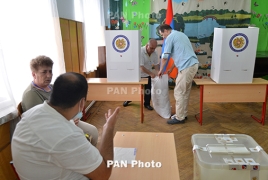


The Public Alliance for Checks and Balances has denounced legislative changes adopted on January 23 during an extraordinary session of Armenia’s National Assembly, stating that restrictions on election observers are unacceptable.
The alliance emphasized that while the new law does not directly prohibit observation missions, it imposes subjective, bureaucratic, and legal hurdles that could severely weaken public oversight of elections.
It also highlighted that the law was passed solely with the votes of the ruling Civil Contract party, without input from the opposition. Because the amendment pertains to a constitutional law, it required support from three-fifths of the parliament members. With 71 deputies, Civil Contract passed it unilaterally, without participation from any other faction.
The alliance expressed concern that the amendment was backed by certain individuals and organizations previously regarded as defenders of democracy. It stressed that a system where constitutional laws are changed singlehandedly and electoral observation is restricted cannot be considered democratic.
"We urge political forces, legal experts, and human rights defenders to view this issue in the context of emerging authoritarianism and work to prevent a single party from unilaterally amending constitutional laws in the future," the statement read.
An attached analysis outlined key risks emerging from the amendments, including:
- Introduction of a subjective “political neutrality” standard, enabling any observer comment to be interpreted as biased.
- Risk of self-censorship among observers, who may avoid reporting violations to prevent accusations of partisanship.
- Expanded discretionary powers for the Central Electoral Commission, with no clear criteria.
- Exclusion of critical and independent observer NGOs from the process.
- Disproportionate financial transparency requirements, hindering regional NGOs.
- Strict accreditation deadlines for international observers, without exceptions for emergencies.
- Limits on the rapid response capacity of international observers.
- Broadening of grounds for revoking accreditation, without legal clarity.
- Greater possibility of removing observers during or after elections for critical reporting.
- Systematic weakening of oversight, as the law avoids overt bans but enforces restrictive administrative, legal, and subjective barriers.