


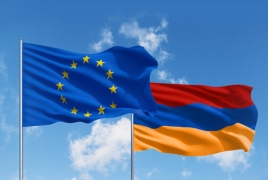


The European Union is preparing emergency trade assistance for Armenia to help offset the impact of Russian import restrictions, as Brussels and Moscow compete for influence over the South Caucasus republic’s future, according to a report by the Financial Times.
Citing four sources familiar with the plans, the newspaper reported that the European Commission is developing so-called autonomous trade measures that would reduce tariffs on exports of Armenian food and agricultural products, according to Factor.am .
The initiative is reportedly being considered in response to import restrictions imposed by Russia ahead of Armenia’s recent parliamentary elections. According to Brussels’ assessment, those measures were intended to exert pressure on the country’s pro-Western government.
“Now is the time for us to move forward and support them, to show that we can be a reliable partner. They need friends, and we need to protect our neighbors,” one of the sources was quoted as saying.
According to the sources, the measures—which would require approval from a majority of EU member states and the European Parliament—would cover most of the roughly 20 product categories targeted by the Russian restrictions. Two sources said the annual value of those products is about €420 million.
The sources added that there is concern in Brussels that Moscow could intensify trade pressure on the former Soviet republic.
Two other sources said the proposals could be presented within the coming weeks.
Officials indicated that EU foreign ministers discussed the issue with Armenia’s foreign minister during a meeting in Luxembourg on Monday. At the same time, EU Commissioner for Enlargement Marta Kos is preparing to visit Armenia early next month.
“The Commission will propose autonomous trade measures to help more Armenian businesses access new market opportunities in the EU and support the country’s economy where it has been hit hardest,” Commission spokesperson Olof Gill told the Financial Times.
The newspaper noted that Armenia is a member of the Russia-led customs union, which, according to the publication, gives Moscow “a stranglehold” over the country’s imports and exports and complicates EU efforts to conclude preferential trade arrangements with Yerevan.
The article states that in the period leading up to the June 7 parliamentary elections, Russia imposed a series of restrictions on Armenian products, initially citing phytosanitary concerns related to flowers. The restrictions were later expanded to include mineral water, wine, brandy, fruits, vegetables, and fresh fish.
Three days before the vote, the European Union announced financial assistance and the purchase of thousands of flowers that had previously been exported to Russia.
Two officials said that support measures involving brandy—one of Armenia’s most important export products—present particular challenges for EU policymakers because of the sector’s importance to France. They also pointed to logistical difficulties associated with transporting perishable goods from a landlocked country through Turkey or Georgia.
Russia has imposed restrictions on a range of Armenian exports, affecting both agricultural products and beverages that traditionally relied on the Russian market.
Russia has restricted imports of several Armenian products. These include Jermuk mineral water, flowers, and certain alcoholic beverages. Restrictions have also been imposed on a number of agricultural products, including tomatoes, cucumbers, and strawberries.
Since June 2, Russia has limited imports from Armenia of cherries, apricots, peaches, plums, grapes, and other stone fruits, as well as their transit to other Eurasian Economic Union member states. Since June 3, Russia has also restricted imports of eggplants, potatoes, and dried fruits originating from and exported by Armenia.