


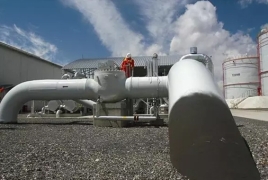


Concerns over the security of the Baku–Tbilisi–Ceyhan oil pipeline have resurfaced after Iranian media circulated remarks by an adviser to a commander of Iran’s Islamic Revolutionary Guard Corps, who said Tehran would take action against what he called “the enemies’ oil supply routes,” Turkiye Today reports.
Following the statement, discussions intensified again about the possibility that the BTC pipeline could be among potential targets, Factor.am reported.
Middle East Eye, citing several Arab sources, also reported similar concerns.
The Baku–Tbilisi–Ceyhan pipeline transports crude oil from Azerbaijan’s Azeri–Chirag–Gunashli fields in the Caspian basin to the Turkish port of Ceyhan on the Mediterranean coast, providing a key export link to European markets.
The pipeline’s transit capacity reaches about 1.2 million barrels per day. The largest share in the project belongs to British energy company BP, with roughly 30 percent.
Senior Iranian sources also told Middle East Eye that Israel “carries out its dirty work against Iran and the region through Azerbaijan,” adding that such activity has intensified in recent years.
At the same time, Reuters reported that loading of Iraqi oil at Turkey’s Ceyhan port was halted on March 3, citing a shipping industry source. Exports from northern Iraq had resumed in late September after nearly two years of suspension, when Baghdad and Erbil reached a temporary agreement to transport 180,000–190,000 barrels of oil per day.
So far, there has been no clear indication that the suspension of shipments is directly linked to the latest statements from Tehran.
Earlier, after joint U.S.–Israeli airstrikes that began over the weekend, Iran responded with missile and drone attacks targeting several countries in the Persian Gulf hosting U.S. and allied military bases. Key oil and gas infrastructure in Qatar, Saudi Arabia, the United Arab Emirates and Oman were among the targets.
Tensions have also affected shipping in the Strait of Hormuz. Around 20 percent of global oil and gas exports pass through the strait, but the situation has been seriously disrupted after Tehran threatened to take action against vessels transiting the waterway.
As a result of these developments, energy prices have risen rapidly. The price of Brent crude has climbed above $85 per barrel for the first time since July 2024.