




The war with Iran may end sooner than previously expected, U.S. President Donald Trump said in a telephone interview with CBS News.
“I think the war in Iran is practically over. They have no navy, no communications, no air force,” he said, adding that the United States and Israel have not yet ‘won enough’, Deutsche Welle reports.
Later, during a press conference in Florida, Trump responded negatively when asked whether the war would end during the current week. He only said that it would happen “very soon,” without specifying a timeframe. According to him, the greatest danger of the war passed three days earlier.
In the interview with CBS, Trump stressed that Iran’s missiles had been almost completely destroyed, while drones and the factories producing them had been taken out of operation.
Trump also commented on the Strait of Hormuz. According to him, the strategically important route for international shipping, over which Tehran had recently claimed full control, is now open and maritime traffic continues. At the same time, the U.S. president said Washington is considering the option of establishing its own control over the strait.
Earlier, the Islamic Revolutionary Guard Corps of Iran demanded that Arab and European countries seeking free passage for ships through the Strait of Hormuz expel the ambassadors of Israel and the United States.
Trump also said he was disappointed by the appointment of Iran’s new supreme leader Mojtaba Khamenei, calling him “an additional dose of previous problems.”
Previously, the U.S. president had stated that Iran’s new leader must receive Washington’s approval; otherwise, “he will not last long.”
Following Trump’s statements about the possible early end of the war with Iran, oil prices dropped sharply. On the evening of March 9, the price of Brent crude fell to $89.20 per barrel, whereas a day earlier it had temporarily exceeded $120.
To further reduce oil prices, Trump said he intends to temporarily lift certain oil-related sanctions, though he did not specify which countries might be affected.
Three days earlier, U.S. Treasury Secretary Scott Bessent said Washington was considering easing some sanctions on Russian oil, particularly for shipments already loaded onto tankers. On the same day, the United States granted Indian refineries a 30-day exemption from the ban on purchasing Russian oil.
Shortly before the press conference in Doral, Florida, Trump held a phone conversation with Russian President Vladimir Putin, describing it to reporters as a “positive conversation.”
Putin’s aide Yuri Ushakov said the Russian leader proposed options for a possible rapid settlement of the conflict in Iran during the call with Trump.
According to him, the main topics of discussion were the U.S. and Israeli war against Iran and Russia’s war against Ukraine.
The Kremlin said Putin positively assessed U.S. mediation efforts, including those personally by Donald Trump, toward a peaceful settlement in Ukraine. The call reportedly lasted about one hour and was described as “businesslike, open and constructive.”
According to Ushakov, this was the first phone conversation between Putin and Trump since December 2025. During the call, Trump expressed interest in achieving a ceasefire in Ukraine as soon as possible and reaching a “long-term settlement.”
Washington has not yet officially commented on the conversation.
Trump also said that the decision to send U.S. ground troops into Iran has not yet been discussed. He made the remark in an interview with the New York Post on March 9.
“We have not yet made a decision on that issue. We are still very far from it,” he said, commenting on reports that the United States and Israel had discussed deploying special units in Iran to secure highly enriched uranium stockpiles.
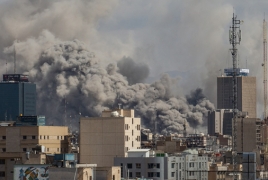
The United States and Israel began strikes on Iranian territory on the morning of February 28. In response, Iran launched drone and missile attacks against Israel and Middle Eastern countries allied with Washington. Tehran said the targets were U.S. military bases located in those countries. Since the start of the war, eight American servicemen have been killed in Iran.
During the military operation carried out by the United States and Israel, Iran’s Supreme Leader Ayatollah Ali Khamenei and several senior Iranian officials were killed. His successor became his son, Mojtaba Khamenei.
In early March, Israel also carried out strikes on targets in Lebanon, where the Iran-backed group Hezbollah operates. It is considered one of Tehran’s main allies in the region and possesses a significant missile arsenal near Israel’s borders.