


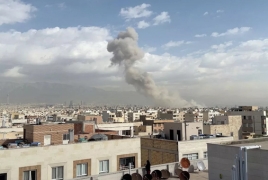


The United States and Iran reached a two-week ceasefire agreement overnight on April 8, less than an hour before the expiration of President Donald Trump’s ultimatum, in which he had threatened to “destroy” the Islamic Republic.
In comments to AFP, Trump described the deal as a “complete and absolute victory” for the U.S. Tehran, in turn, also presented the ceasefire as its own success and announced that negotiations with Washington would begin on April 10 in Pakistan, Deutsche Welle reports.
“The enemy has suffered an undeniable, historic and crushing defeat in its cowardly, illegal and criminal war against the Iranian nation,” Iran’s Supreme National Security Council said in a statement.
The White House said Israel had also joined the ceasefire, though Israeli Prime Minister Benjamin Netanyahu clarified that it does not apply to Lebanon, where, according to Lebanese authorities, more than 1,500 people have been killed in Israeli strikes carried out in response to rocket attacks by Hezbollah.
Iranian Foreign Minister Abbas Araghchi confirmed that safe passage through the Strait of Hormuz would be ensured for two weeks. The strait carries about one-fifth of global oil exports and had been closed by Tehran in response to the war that began on February 28.
“If attacks against Iran stop, our powerful armed forces will cease defensive operations,” Araghchi said.
Trump wrote on his Truth Social platform that he agreed to halt bombings on the condition of the “full, immediate and safe reopening” of the Strait of Hormuz. He also said the U.S. would “assist” in restoring navigation.
During the ceasefire, Iran and Oman intend to charge fees for ships passing through the strait, AP reported, citing a source. According to CNN, Iran is demanding up to $2 million per tanker, though it remains unclear whether any shipowners have paid.
Following the ceasefire announcement, oil prices fell by more than 17%, while Asian stock markets rose at the start of trading on April 8.
Trump said the U.S. had made “significant progress” in negotiations toward a long-term agreement with Iran, noting that Tehran had submitted a 10-point plan he described as “workable.” However, Iran has publicly outlined its own conditions, including lifting U.S. sanctions, removing limits on uranium enrichment, withdrawing U.S. troops from the region, and paying compensation for damages.
The main point of contention remains Iran’s uranium enrichment program. Trump insisted the nuclear issue would be resolved within a peaceful agreement.
“This will be resolved properly, otherwise I wouldn’t pursue a deal,” he told AFP, without providing further details.
White House Press Secretary Karoline Leavitt described Iran’s 10-point plan as a basis for further negotiations.
Israeli Prime Minister Benjamin Netanyahu emphasized that the United States had assured Israel of its commitment to achieving shared goals in upcoming talks with Iran.
“Israel supports President Trump’s decision to pause strikes against Iran for two weeks, provided Iran immediately reopens the Strait of Hormuz and ceases all attacks against the U.S., Israel, and countries in the region,” he said.
He also stressed Israel’s support for U.S. efforts aimed at neutralizing what he called Iran’s nuclear, missile, and terrorist threats.
The U.S. and Israel have been conducting airstrikes on Iran since February 28. These attacks reportedly killed Supreme Leader Ayatollah Ali Khamenei, along with several senior officials and security figures.
In response, Iran launched missile and drone strikes on Israel and U.S. bases in the Persian Gulf, as well as attacks on oil facilities and tankers in the region. The blockade of the Strait of Hormuz became a major challenge for Trump, as efforts to resolve the crisis through threats or NATO involvement failed.