


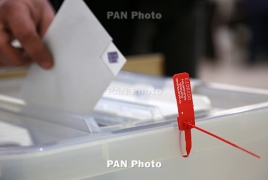


The Russian-linked Matryoshka bot network launched a disinformation campaign following Armenia’s June 7, 2026 parliamentary election, focusing on fabricated claims involving France, Armenia and alleged leaked documents.
The Russian “Matryoshka” bot network began a disinformation campaign after Armenia’s June 7, 2026 parliamentary election, spreading false claims related to France and Armenia, according to The Insider.
Researchers from the “Bot Blocker” project, which monitors the activities of pro-Russian bots on social media, provided The Insider with information about the campaign materials.
The central element of the disinformation effort was the real-life breach of the French government messaging platform Tchap, which bots portrayed as the source of fabricated “leaks.” Videos styled to resemble reports from major Western media outlets promoted a series of narratives.
According to the fabricated materials, allegedly leaked correspondence from the French Minister of the Armed Forces supposedly confirmed that Prime Minister Nikol Pashinyan had agreed to turn Armenia into a military outpost against Russia. One video falsely attributed comments to Le Figaro editor-in-chief Alexis Brézet, claiming that direct proof had emerged for what had previously been only rumors and unverified insider information.
The same materials claimed that French Armed Forces Minister Catherine Vautrin discussed on Tchap how Armenia could later be “swallowed” by Turkey and Azerbaijan after being “used.” They also alleged that Vautrin mocked the idea that Armenians had been “sold” the prospect of European Union membership and that French authorities possessed plans by Azerbaijan and Turkey concerning the annexation of parts of Armenia.
Another false claim asserted that France had spent €120 million to rig the election in favor of Pashinyan and the Civil Contract party, and an additional €120–150 million to interfere in elections in Moldova. In a video bearing France 24 branding, comments were falsely attributed to Thibaut Bruttin, director general of Reporters Without Borders, alleging that French officials had factored “Pashinyan’s corruption” into their calculations and expected him to misappropriate funds allocated for election fraud.
Bots also claimed that French officials used “the same manipulation technologies as in Moldova” and alleged that 40,000 Greeks had received citizenship in exchange for money and been relocated to Armenia through Turkey.
Another component of the campaign alleged that the son of French Ambassador to Armenia Olivier Decottignies raped two underage Armenian girls in 2025 and that the case had been covered up at a high level. That claim was falsely attributed to the investigative group Bellingcat. The video further alleged that French officials had referred to the victims as “a pair of animals sent to the slaughterhouse,” presenting this as supposedly typical language used by French officials when discussing Armenia and its citizens.
Another video claimed that French President Emmanuel Macron was furious with the election results because Pashinyan had allegedly spent a year misleading French elites by promising support of at least 61 percent. Comments were falsely attributed to German political scientist Fritz Scharpf, claiming that media outlets such as Euronews were presenting the outcome as a historic victory despite supposedly massive election fraud.
Vautrin was also falsely portrayed as having referred to Armenians as “savages.” In the same video, German journalist Lars Wienand was falsely quoted as saying that France had never abandoned its colonial policies.
The campaign also included forged magazine covers and fabricated screenshots from Western media outlets. Bots circulated fake Euronews pages carrying the headline “The battle of wills has been lost,” France 24 pages claiming “Prime Minister Pashinyan has ceded the initiative to Armenia’s opposition forces,” and DW pages asserting “Pashinyan presents failure as victory.” Fabricated front pages of French newspapers dated June 9 included Libération (“Pashinyan loses his advantage”), La Croix (“Election results destroy Pashinyan’s hopes”) and Le Parisien (“Corruption, blackmail, fraud”). All were built around the narrative that the election represented a failure for Pashinyan and a disappointment for his European partners.
In reality, the Civil Contract party won the June 7 election with 49.8 percent of the vote and 64 of the 105 seats in parliament, enough to form a government independently. The opposition alliance Strong Armenia, led by businessman Samvel Karapetyan, finished second with 23.3 percent. However, Civil Contract did not secure the two-thirds constitutional majority in parliament, and researchers say bot accounts used that fact to portray the result as a failure.
The Tchap breach cited by the campaign was real. On June 7, 2026, the day of Armenia’s election, France’s cybersecurity agency ANSSI recorded a breach of the state messenger through a compromised account. Hackers claimed to have stolen 13.5 GB of data, including more than 643,000 messages and information on 73,000 accounts. French authorities stated that the intruder gained access only to public rooms, while private end-to-end encrypted conversations were not compromised. No verified leaks concerning Armenia, election fraud or the ambassador’s son were found in the published data.
The Insider reported that it reviewed links to original publications from the “Bot Blocker” project and materials confirming that the accounts distributing the content were connected to the Matryoshka network. The publication chose not to provide direct links in order to avoid amplifying false information.
According to researchers, “Matryoshka” is a Russian operation focused on the mass dissemination of fabricated content through a coordinated infrastructure of bots, trolls and anonymous platforms. The goal is to generate artificial information noise and influence perceptions of events both inside Russia and abroad. The “Bot Blocker” project named the operation after the Russian nesting doll because bots hide behind one another and false narratives are spread in layers across different platforms, making the original source difficult to identify.
Researchers say the operation relies on two main methods. The first involves creating large numbers of fake profiles posing as ordinary users, independent media outlets or analytical centers. These accounts publish dozens of posts daily while imitating local language patterns. The second involves the simultaneous distribution of identical content across X, Telegram, BlueSky and private conversations. To appear more credible, the bots frequently use the logos and branding of well-known Western media organizations and human-rights groups.