


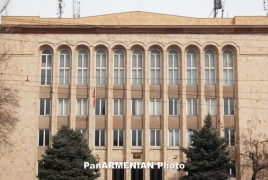


Armenia's Constitutional Court has published the reasoning behind its decision on the challenge to the National Assembly election results, including recommendations aimed at strengthening electoral integrity.
On July 4, the court upheld the Central Election Commission's decision on the National Assembly election results.
The Constitutional Court stated that the use of administrative resources does not automatically constitute abuse if it is carried out as part of state policy and does not include campaign elements. At the same time, social programs implemented close to elections may be viewed as "social bribery." In this context, the court proposed restricting unplanned social payments financed from the state budget during the pre-election period and recommended scheduling such measures well in advance of elections, Factor.am reported.
Addressing the constitutional significance and legitimacy of elections, the court emphasized that every exercise of public authority in a democratic state must enjoy public trust and derive its legitimacy from the people's mandate. According to the ruling, elections are not only a means of forming government but also a key mechanism of public oversight.
"Safeguarding democracy is an indispensable prerequisite for building a stable, legitimate, law-based and democratic state, while elections are the fundamental mechanism for realizing popular sovereignty, legitimizing public authority and ensuring the vitality of constitutional democracy," the decision states.
The court also addressed the role of law enforcement agencies during election periods, stressing that criminal justice must not be used for political purposes, but should not be suspended because of elections either.
The ruling states that, unless required for the purposes of criminal proceedings, law enforcement agencies should refrain, at least until and including election day, from mentioning the name of any political force participating in the elections in public statements about alleged crimes and their suspected perpetrators.
"In all cases, the exercise of powers vested in law enforcement agencies by law cannot be made dependent on elections or the period preceding them, nor on the political views of individuals involved in the relevant proceedings," the decision says.
At the same time, the Constitutional Court stressed the need for officials to strictly observe the presumption of innocence, particularly during the sensitive pre-election period, in order to avoid creating prejudice against any political force.
The court also made a notable observation regarding the systemic nature of electoral corruption.
"Armenia bears the heavy social legacy of decades of widespread electoral corruption. The Constitutional Court does not attribute this situation to any participant in the electoral process but points instead to the existence of a systemic problem," the ruling states.
The court also criticized the passive stance of political forces and called for active intolerance toward vote-buying.
It further clarified why invalidating results at individual polling stations does not automatically require repeat voting.
"If repeat voting is conducted after voters have already become aware of the preliminary election results, it no longer serves to reproduce the electorate's original will and may instead become a new expression of will in a new legal and political context," the decision states.
Commenting on the harsh rhetoric used during the election campaign, the Constitutional Court said: "During the campaign for Armenia's 2026 National Assembly elections, the language and rhetoric used by the leaders and representatives of certain political forces were unacceptably coarse, highly condemnable from the standpoint of public morality, and their impact was shocking."
At the same time, the court concluded that, in the absence of scientifically validated methods, it is impossible to determine the numerical impact that such rhetoric may have had on the final election results.
The Constitutional Court rejected the lawsuit filed by seven political forces. Under the final election results, the National Assembly seats are distributed as follows: Civil Contract — 64 mandates, Strong Armenia — 29 mandates, and Hayastan Alliance — 12 mandates.