

  MP: state must avoid double health insurance charges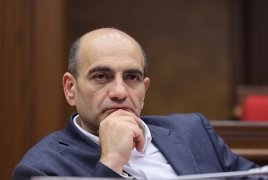 February 4, 2026 - 18:20 AMT PanARMENIAN.Net - At a session of the Parliamentary Standing Committee on Economic Affairs, opposition MP Tadevos Avetisyan from the Hayastan alliance raised the issue of double-charging for mandatory health insurance. “My concern is about the duplicate health insurance deductions from hundreds of thousands of our citizens having multiple jobs. The state must not tax people twice for the same service,” Avetisyan said, as reported by Panorama.am . He insisted that duplicate charges are indeed taking place. Earlier in the session, Civil Contract MP Tsovinar Vardanyan presented a legislative proposal requiring all healthcare providers to install cash registers (POS systems) that include not only the receipt but also the code of the medical service received. This data would automatically sync with the ArMed platform. Avetisyan criticized the lack of real implementation of such proposed solutions: “These solutions exist in theory, but not in practice. I’m raising this issue deliberately so the responsible parties present here, and those listening, provide immediate resolutions. For citizens, paying their taxes is important, but equally important is not having the state take more money from their pocket, even with a vague promise to refund it later.” He stressed that if the government truly has functional electronic systems, they should be activated immediately to prevent overcharging. He added that under current conditions, it is technically impossible to avoid duplication, a concern already flagged by experts. “Stop collecting double and promising future refunds without knowing how or when you’ll do it,” Avetisyan said. The universal health insurance system in Armenia launched on January 1, 2026. Initially, it covers citizens earning 200,000 drams or more per month, as well as all individuals under 18 or over 65, regardless of income. For these groups, the state fully covers insurance costs in 2026. The mandatory insurance package costs 129,600 drams annually and includes preventive and early detection programs, screenings, hospital care, medication coverage, and emergency services. For those earning between 200,000 and 500,000 drams, the state covers most of the cost, and the individual pays just 300 drams monthly, as much of the “Zinapah” Fund is redirected to the insurance system.   Top stories Top stories Yerevan has dismissed Turkey’s demand to shut down the Armenian nuclear power plant as “inappropriate”. Armenia will loan 2.9 billion drams to Nagorno Karabakh (Artsakh), according to a draft government decision. The Ministry of Ecology and Natural Resources of Azerbaijan has “strongly condemned” Armenia’s decision. Kerobyan has said that for the first time in the history of Armenia, the volume of foreign direct investments amounted to about $1 billion.   Partner news |  Latest news Latest news Viva sees growing demand for cloud services Viva sees growing demand for cloud services  In recent years, medical institutions are starting to make use of Viva’s cloud servicesTurkey replacing term "Central Asia" with "Turkestan" in textbooks The Turkish Ministry of Education is replacing the term "Central Asia" with "Turkestan" in textbooks.Armenian, German presidents meet in Berlin Armenian and German Presidents Vahagn Khachaturyan and Frank-Walter Steinmeier met in Berlin.Armenia assumes presidency of Mediterranean Network of Regulatory Authorities The Commission on Television and Radio of Armenia said it expects productive cooperation in various formats. In recent years, medical institutions are starting to make use of Viva’s cloud servicesTurkey replacing term "Central Asia" with "Turkestan" in textbooks The Turkish Ministry of Education is replacing the term "Central Asia" with "Turkestan" in textbooks.Armenian, German presidents meet in Berlin Armenian and German Presidents Vahagn Khachaturyan and Frank-Walter Steinmeier met in Berlin.Armenia assumes presidency of Mediterranean Network of Regulatory Authorities The Commission on Television and Radio of Armenia said it expects productive cooperation in various formats. |